 |
The Tokyo Express
|
|
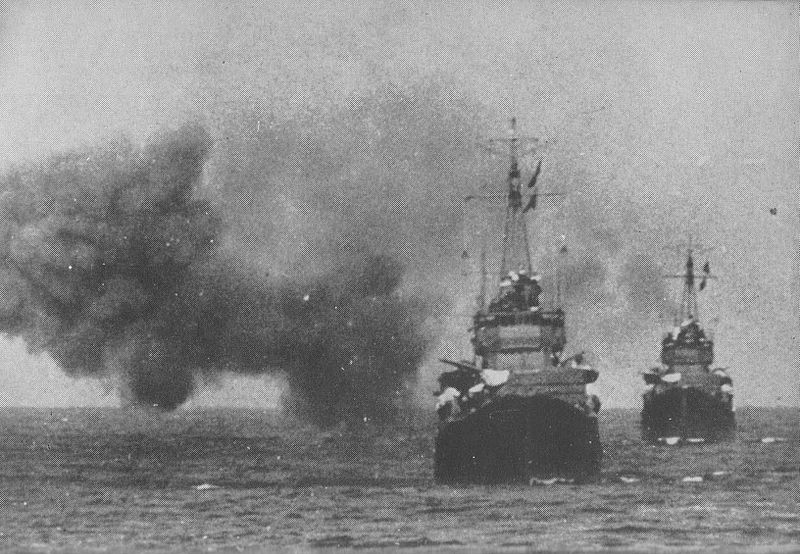
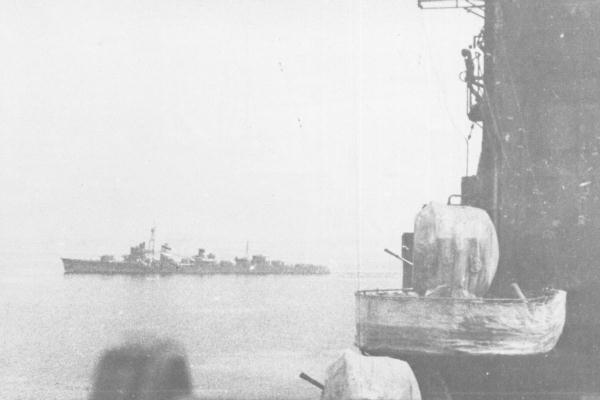
Imperial Japanese Navy destroyers Shigure and Samidare operating off the coast of Bougainville in the Solomon Islands, just hours before the Batlle of Vella Lavella. (Imperial Japanese Navy)
What exactly was the Imperial Japanese Navy's task force the Guadalcanal PT's fought with almost night after night for four months?
The Japanese simply termed it the Reinforcement Unit; as the "Rat Transportation" effort, the bulk of the force was composed of destroyers with a light crusier as flagship from Destroyer Squadron Two led by Rear Adm. Raizo Tanaka, plus any other units deemed necessary to carry out the mission. The mission itself was simple enough: transport reinforcements to the Japanese 17th Army on Guadalcanal, keep the troops continually armed and fed, and at the same time punishing the opposition--the United States Marines--with a bombardment. To the Americans, any Japanese naval presence in the waters of Ironbottom Sound, whether it was simply a destroyer-transport/resupply group or a brawny gunfire support unit stacked with battleships and heavy cruisers was known as an “Express”, because of the express-train timetable regularity that it conducted its nightly operations.
The American sailors and Marines had a long list of colorful names for what one PT squadron commander dryly called--partly in jest--"that nocturnal annoyance". The PT men originally dubbed Tanaka’s group the Bougainville Express--Bougainville in the upper Solomons was a Japanese-held island, where the Imperial Navy had a major base. The much-harassed Marines branded it the Cactus Express after the American code name for Guadalcanal; the indignant Leathernecks also had an amazing string of other names for the Reinforcement Unit, all primordially obscene and best left to the imagination. Another nom-du-guerre was the Insomnia Express, in reference to the shellings from Japanese warships, designed primarily to wear American resistance down by keeping the Marines running for foxholes all night. Apparently a journalist coined the term the Tanaka Force would be forever known by, and the commander of the South Pacific Forces--Vice Adm. William F. Halsey--quickly adopted it. One PT officer said later: “It was still the same as the Bougainville Express, but the Tokyo Express is what Admiral Halsey called it, and who were we to argue with him?”
This page details the missions of the rivals to the “wooden wonders of Tulagi"--the ships that composed, and the officers who ran the dreaded Reinforcement Unit--the Tokyo Express.
13/14 October 1942

Henderson Field Bombardment Unit: Vice Adm. Takeo Kurita IJN in Kongo
Battleships: Kongo, Haruna
Light Cruiser: Izuzu
Destroyers: Takanami, Oyashio, Kuroshio, Hayashio, Naganami, Umikaze,
Kawakaze, Suzukaze
MTBRON Three: Senior Officer, Lt. Comdr. Alan R. Montgomery USN (Squadron CO) in PT 60
PT 38 (Lt. j/g Robert L. Searles USNR)
PT 46 (Lt. j/g Henry S. Taylor USNR)
PT 48 (Lt. j/g Robert C. Wark USNR)
PT 60 (Lt. j/g John M. Searles USNR)
Comments: First PT action in the Guadalcanal area. The first four boats of Motor Torpedo Boat Squadron Three attacked the Japanese bombardment force, PT 60 claiming two torpedo hits, PT 38 claiming one. PT 48 strafed one destroyer’s searchlight with machine-gun fire, putting it out. Destroyer Naganami, with one other ship gave chase to PT 60, which discouraged their pursuit by dropping a couple of depth charges in her wake. The PT 60 later ran aground on a coral reef, seriously damaging her hull; she would be out of action until May 1943. Torpedo Boat Squadron Three attacked the Japanese bombardment force, PT 60 claiming two torpedo hits, PT 38 claiming one. PT 48 strafed one destroyer’s searchlight with machine-gun fire, putting it out. Destroyer Naganami, with one other ship gave chase to PT 60, which discouraged their pursuit by dropping a couple of depth charges in her wake. The PT 60 later ran aground on a coral reef, seriously damaging her hull; she would be out of action until May 1943.
Radio Tokyo broadcast that Kurita’s force was attacked by nineteen torpedo boats, which they claimed to have sunk fourteen for the loss of a light cruiser. A coastwatcher reported that natives saw “a large ship” sinking the next morning off New Georgia. Based on these reports, the squadron reported one cruiser probably sunk, one damaged; but these claims could not be confirmed after the war.
29/30 October 1942

Troop Reinforcement Run
Destroyers: Shigure, Ariake
MTBRON Three: Senior Officer, Lt. Hugh M. Robinson USN
(Squadron XO) in PT 61
PT 37 (Lt. j/g Leonard A. Nikoloric USNR)
PT 38 (Lt. j/g Robert L. Searles USNR)
PT 45 (Lt. j/g Thomas E. Kendall USNR)
PT 46 (Lt. j/g Henry S. Taylor USNR)
PT 48 (Ens. James B. Greene USNR)
PT 61 (Lt. Robinson)
 Comments: The second division of MTBRON Three arrived on 25 October, bringing the total number of boats to eight. Radio intelligence warned the PT officers of the destroyers’ approach, and the five operational boats waited to meet it. Lt. Searles' (left) PT 38 was nearly run down by a destroyer, which was first seen heading east through the Savo-Cape Esperance channel by Ens. Greene in PT 48 before he lost it in the darkness. The enemy ship wasn’t sighted again until a flare from an American aircraft illuminated it; this time it was heading west and bearing down on the PT 38 at high speed. The 38 escaped at 26 knots laying smoke. Ens. Greene in PT 48 intercepted the destroyer and fired three torpedoes at 400 yards, while the destroyer opened up with automatic weapons fire, holing the boat in many places. Greene claimed one torpedo hit the destroyer, but this is unconfirmed. None of the other boats made contact with the enemy, and the Japanese destroyers returned to their base in the Shortland Islands with a portion of their cargoes.
5/6 November 1942

Troop Reinforcement Run
Ko (“A”) Detachment:
Desdiv 2: Murasame, Harusame, Yudachi
Desdiv 27: Shigure, Shirayatsu, Ariake, Yugure
Desdiv 8: Arashi, Michisio, Asagumo
Otsu (“B”) Detachment:
Light cruiser: Tenryu
Desdiv 11: Shirayuki, Mochizuki
Desdiv 19: Uranami, Shikanami, Isonami
MTBRON Three: Senior Officer, Lt. Hugh M. Robinson USN (Squadron CO) in PT 61
PT 37 (Lt. j/g Leonard A. Nikoloric USNR)
PT 39 (Lt. j/g Henry S. Taylor USNR)
PT 48 (Lt. j/g Thomas E. Kendall USNR)
PT 61 (Lt. Robinson)
 Comments: The Otsu Detachment delivered part of the 228th Japanese Infantry Regiment to Cape Esperance, while the Ko unit landed Maj. Gen. Ito, the commander of the 38th Infantry Group, his headquarters, and the remainder of the 228th Infantry at Tassafaronga. 206 construction workers and 142 soldiers returned in the destroyers. The only PT contact came when Lt. Taylor (left) in PT 39 detected two ships headed for Tassafaronga. The ships were not visible in the darkness, but the boat began rolling in the destroyers’ wakes as they passed. Taylor lost track of the two ships in the darkness; forty minutes later—almost at the moment when Taylor made out the silhouette of an enemy warship, Murasame caught the PT 39 full in its searchlight, and opened fire with all guns. Taylor tried to get his torpedoes away, but only one fired—which missed. 5-inch shells from Murasame dropped within fifty yards of the retiring PT, while 39’s gunners put out the destroyer’s searchlight with machine-gun fire. A second enemy ship illuminated PT 39 as she ran for safety, dropping heavy caliber shells in her wake and churning up the sea around the boat with automatic gunfire. The boat escaped behind a smoke screen. Comments: The Otsu Detachment delivered part of the 228th Japanese Infantry Regiment to Cape Esperance, while the Ko unit landed Maj. Gen. Ito, the commander of the 38th Infantry Group, his headquarters, and the remainder of the 228th Infantry at Tassafaronga. 206 construction workers and 142 soldiers returned in the destroyers. The only PT contact came when Lt. Taylor (left) in PT 39 detected two ships headed for Tassafaronga. The ships were not visible in the darkness, but the boat began rolling in the destroyers’ wakes as they passed. Taylor lost track of the two ships in the darkness; forty minutes later—almost at the moment when Taylor made out the silhouette of an enemy warship, Murasame caught the PT 39 full in its searchlight, and opened fire with all guns. Taylor tried to get his torpedoes away, but only one fired—which missed. 5-inch shells from Murasame dropped within fifty yards of the retiring PT, while 39’s gunners put out the destroyer’s searchlight with machine-gun fire. A second enemy ship illuminated PT 39 as she ran for safety, dropping heavy caliber shells in her wake and churning up the sea around the boat with automatic gunfire. The boat escaped behind a smoke screen.
6/7 November 1942
Troop Reinforcement Run
Ships: Not known
MTBRON Three: Senior Officer, Lt. Hugh M. Robinson USN in PT 61
PT 37 (Lt. j/g Leonard A. Nikoloric USNR)
PT 48 (Lt. Lester H. Gamble, USNR)
PT 61 (Lt. Robinson)
Comments: PT’s 37 and 48 sighted an enemy ship(identified as a heavy cruiser or a destroyer) sailing slowly on a westerly heading off Guadalcanal’s Koli Point. Lt. Nikoloric’s PT 37 fired four torpedoes, which missed. Lt. Gamble in PT 48 also fired four, two of which were seen by the crew to explode. A single burst of shellfire passed overhead as the 48 boat made its getaway. A large oil slick was seen in the area the next morning, but no confirmation of a sinking or damage could be found from Japanese sources after the war.
8/9 November 1942
Destroyer Resupply Run
Otsu Detachment:
Light cruiser: Tenryu
Destroyers:
Desdiv 2: Murasame, Yudachi
Desdiv 27: Shigure, Shirayatsu, Yugure, Asagumo, Mochizuki, Arashi,
Michisio
MTBRON Three: Senior Officer, Lt. Hugh M. Robinson USN in PT 61
PT 37 (Lt. j/g Leonard A. Nikoloric USNR)
PT 39 (Ens. James B. Greene USNR)
PT 61 (Lt. Robinson)
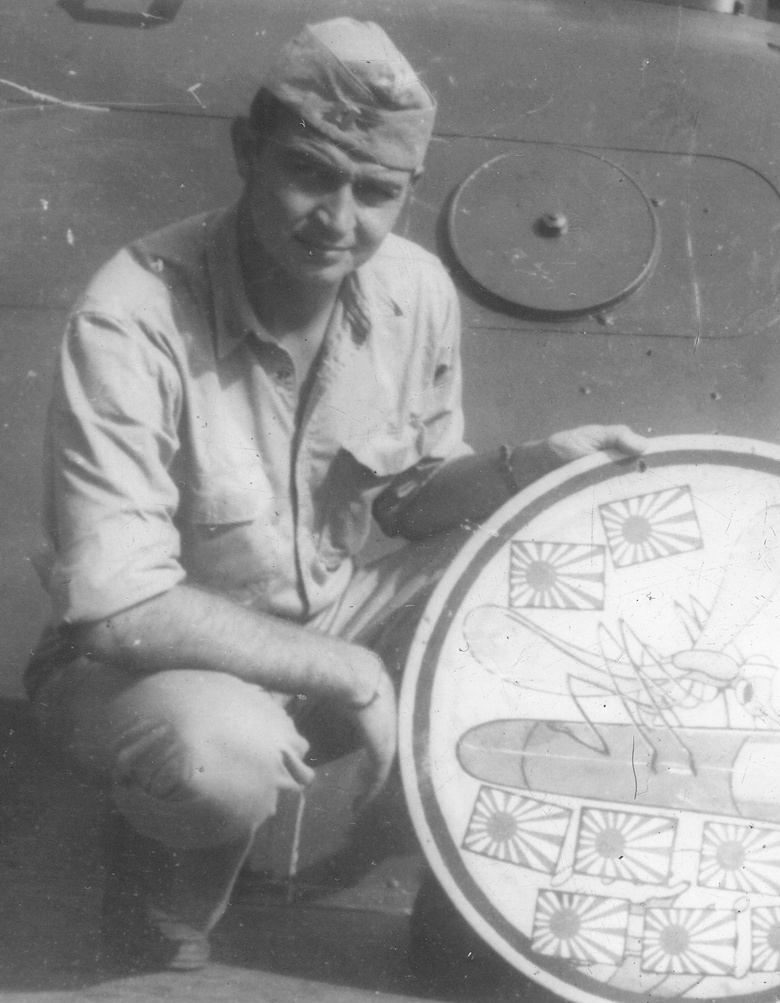 Comments: For this run, the Otsu Detachment was on a resupply and bombardment mission--among those on the receiving end of the shelling was South Pacific Force commander Vice Adm. William Halsey, who was visiting Guadalcanal to see the Marines’ plight for himself. At 2144 hours off Tassafaronga, three Japanese destroyers began battling with Lt. Robinson’s PT division. Ens. Greene’s PT 39 let go two torpedoes but scored no hits. Lt. Robinson (left) in PT 61 couldn’t fire because it was blocked by Lt. Nikoloric’s PT 37, but the 37 fired two torpedoes at 500 yards, and unloaded a third a few seconds later. One of these torpedoes hit the elderly destroyer Mochizuki, causing minor damage; some sources say the torpedo failed to explode. The destroyers turned on their searchlights and began shelling the PT’s heavily, with one 4.7-inch shell from Mochizuki striking PT 61 forward, blowing off her bow. The boats escaped behind a smoke screen, and PT 61 was able to return to Tulagi safely. The eight-minute engagement was Ron Three’s quickest action with the Japanese. Comments: For this run, the Otsu Detachment was on a resupply and bombardment mission--among those on the receiving end of the shelling was South Pacific Force commander Vice Adm. William Halsey, who was visiting Guadalcanal to see the Marines’ plight for himself. At 2144 hours off Tassafaronga, three Japanese destroyers began battling with Lt. Robinson’s PT division. Ens. Greene’s PT 39 let go two torpedoes but scored no hits. Lt. Robinson (left) in PT 61 couldn’t fire because it was blocked by Lt. Nikoloric’s PT 37, but the 37 fired two torpedoes at 500 yards, and unloaded a third a few seconds later. One of these torpedoes hit the elderly destroyer Mochizuki, causing minor damage; some sources say the torpedo failed to explode. The destroyers turned on their searchlights and began shelling the PT’s heavily, with one 4.7-inch shell from Mochizuki striking PT 61 forward, blowing off her bow. The boats escaped behind a smoke screen, and PT 61 was able to return to Tulagi safely. The eight-minute engagement was Ron Three’s quickest action with the Japanese.
10/11 November 1942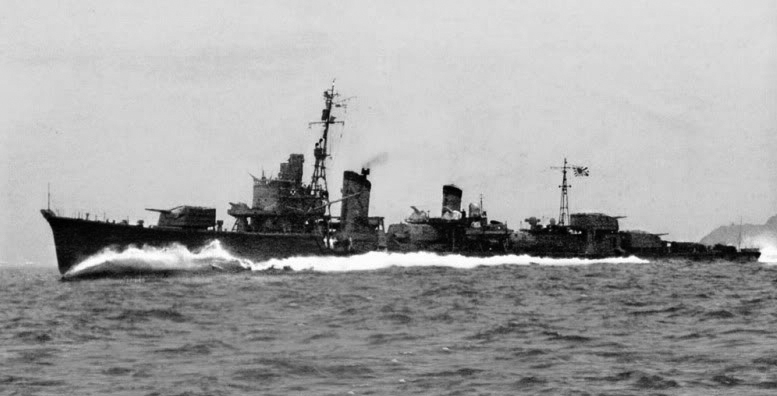
Troop Reinforcement Run
Destroyers:
Desdiv 10: Yugumo, Makigumo, Kasegumo
Unattached: Makinami, Suzukaze
MTBRON Three: Senior Officer, Lt. Hugh M. Robinson USN in PT 45
PT 37 (Lt. j/g Leonard A. Nikoloric USNR)
PT 45 (Lt. Robinson)
PT 48 (Lt. j/g Thomas E. Kendall USNR)
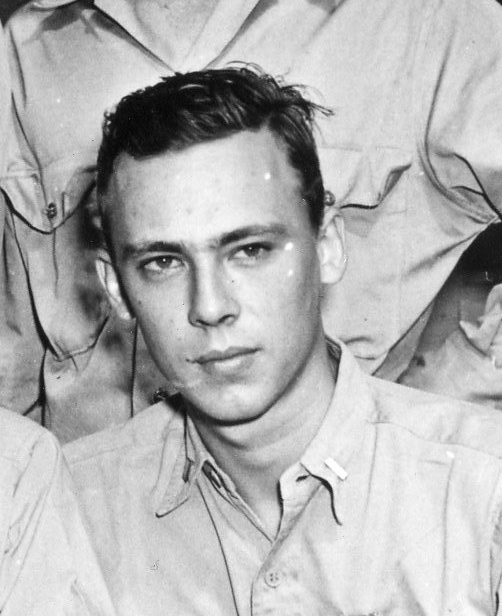 Comments: The Express run for tonight carried ammunition, supplies, and 600 men including the commander of the 38th Infantry Division (Lt. Gen. Tadayoshi Sano), his staff, and Imperial Navy Lt. Comdr. Masatoshi Funabashi to act as a spotter for a future naval shelling of Henderson Field. The PT’s were patrolling south of Savo Island when they saw four of the destroyers off the Guadalcanal coast; the boats tried to close the range for a torpedo attack, but the destroyers saw them first. Lt. Robinson got two torpedoes away, while Lt. Nikoloric’s PT 37 fired off one. As this went on, a shell exploded so close to the 37 boat that everyone on deck was knocked down and stunned except for quartermaster John D. Legg, who kept the boat moving until Lt. Nikoloric (left) regained consciousness. Lt. Kendall’s PT 48 fired no torpedoes, but traded bullets with several enemy ships. The Japanese destroyers returned to Shortland with 585 sick.
13/14 November 1942
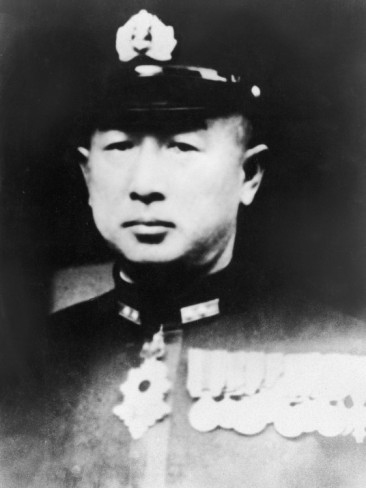
Henderson Field Bombardment Force: Rear Adm. Shoji Nishimura IJN in Suzuya
Cruiser Division 7: Suzuya, Maya
Light Cruiser: Tenryu
Destroyers:
Destroyer Division 10: Yugumo, Makigumo, Kasegumo
Destroyer Division 8: Michisio
Destroyer Division 30: Mochizuki
Destroyer Division 20: Amagiri
MTBRON Three: Senior Officer, Lt. John M. Searles USNR
(Squadron XO) in PT 39
PT 37 (Lt. Robert L. Searles USNR)
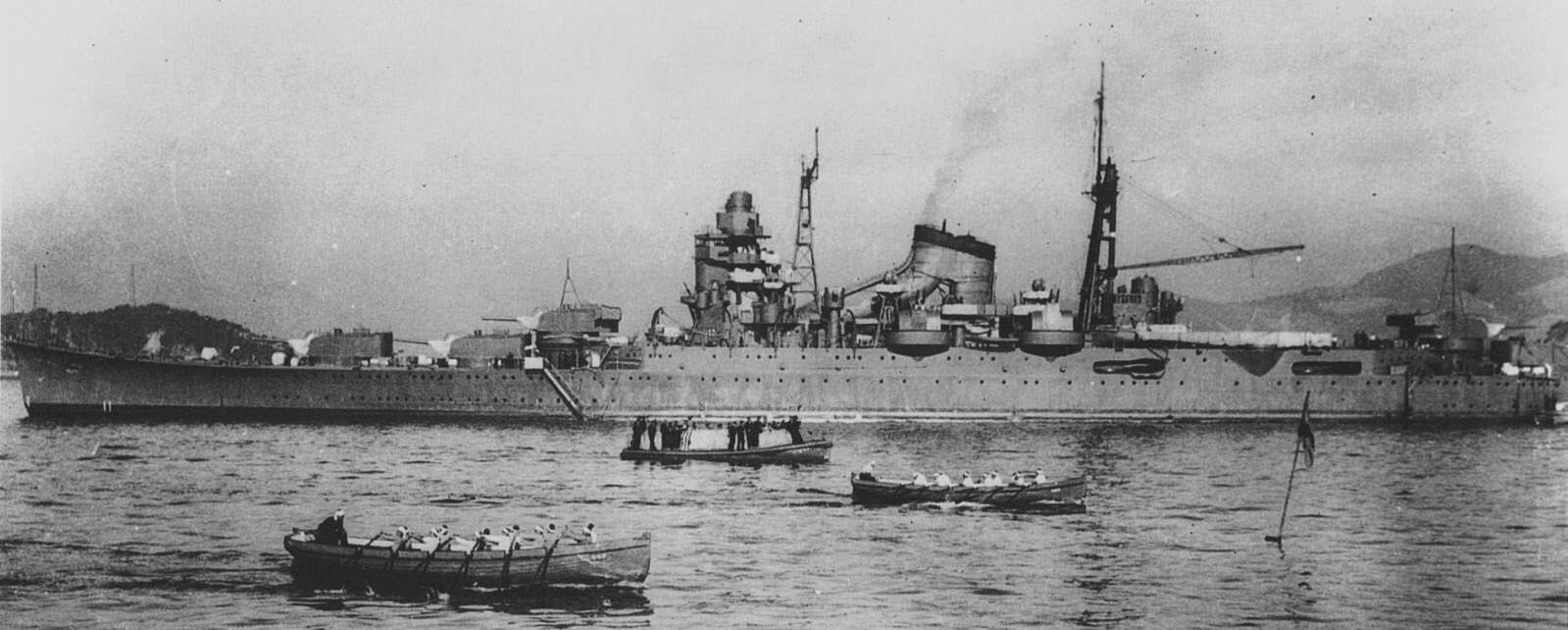 PT 39 (Lt. John Searles)
PT 45 (Lt. Lester H. Gamble USNR)
PT 46 (Lt. Henry S. Taylor USNR)
PT 48 (Lt. j/g Thomas E. Kendall USNR)
Comments: Admiral Nishimura’s (above) bombardment force fired 989 rounds of 8-inch ordinance onto Henderson Field with negligible results. PT’s 37 and 39 fired torpedoes at the Japanese warships as they came in through Sandfly Passage, but scored no hits. Lt. Kendall’s PT 48 fired two torpedoes at US heavy cruiser Portland, which was limping into Tulagi Harbor and crippled from damage received during the first phase of the Naval Battle of Guadalcanal the previous evening. Fortunately those torpedoes missed as well. Later, Lt. Taylor’s PT 46 closed to 1,000 yards of a cruiser and fired three torpedoes, one of which he was certain was a hit. Lt. Gamble’s PT 45 with Lt. John Searles aboard (Searles transferred to Gamble’s boat from the now-torpedoless PT 39) fired two torpedoes at a destroyer and claimed two hits. After the PT’s attacked, Nishimura's ships stopped shelling and retreated. Henderson Field suffered 18 planes destroyed and 32 damaged, but the field was still usable.
24/25 November 1942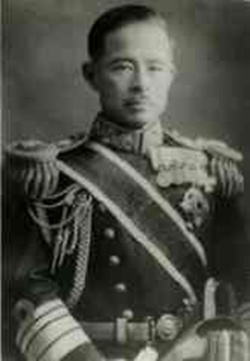
Submarine Supply Run
Submarines: I-17, I-19
PT patrol:
PT 36 (Lt. j/g Marvin G. Pettit USNR)
PT 37 (Lt. j/g Leonard A. Nikoloric USNR)
PT 46 (Lt. Henry S. Taylor USNR)
PT 48 (Lt. j/g Thomas E. Kendall USNR)
Comments: On November 16, 1942, the Commander Sixth Fleet--Submarines, Vice Adm. Teruhisa Komatsu (above, right) gathered his captains together and informed them of the submarine force's new mission, ordered by Combined Fleet commander Adm. Isuorku Yamamoto: organize a supply system using their submarines to deliver food to the starving troops of the 17th Army on Guadalcanal.
I-17 and I-19, after a few modifications, departed their base at Shortland Island for the first supply attempt on November 22. Both submarines, loaded with about 20 tons of supplies, arrived off Kamimbo Bay on the night of the 24th. I-17 was able to disembark 11 tons of her cargo before the presence of the regular PT patrol and aircraft interrupted the operation. I-19 was unable to unload any supplies at all. The following evening, I-17 departed Guadalcanal with 8 tons of cargo still aboard, along with seven passengers: Lt. Cmdr. Eiji Sakuma (former commander of sunken destroyer Ayanami), some midget submarine crews, and some sick soldiers. I-19 was able to deliver 32 tons of supplies on the evening of the 26th.
7/8 December 1942
 Destroyer Resupply Run: Capt. Torajiro Sato IJN in Oyashio
Destroyers: Oyashio, Kagero, Nowaki, Kuroshio, Kawakaze, Suzukaze, Naganami, Ariake,
Urakaze, Arashi, Tanakaze
PT Unit: Senior Officer, Lt. Rollin E. Westholm USN
(CO MTBRON Two) in PT 109
Scout Group 1:
PT 40 (Lt. Henry S. Taylor USNR)
PT 48 (Lt. Robert L. Searles USNR)
Scout Group 2:
PT 43 (Lt. Charles E. Tilden USNR)
PT 109 (Lt. Westholm)
Strike Force:
PT 36 (Lt. j/g Marvin G. Pettit USNR)
PT 37 (Lt. Lester H. Gamble USNR)
PT 44 (Lt. Frank Freeland USNR)
PT 59 (Lt. John M. Searles USNR)
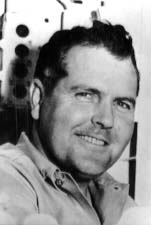 Comments: Captain Sato's ships carried drums filled with food and ammunition for tonight's trip; this would be the third attempt to deliver supplies by this method. The first, on the night of 30 November/1 December 1942, culminated in the Battle of Tassafaronga a humiliating defeat of the US Navy's Task Force 67, composed of cruisers and destroyers. At Tulagi, the PT flotilla has been bolstered by the arrival of two divisions of four boats each from MTBRON Two under Lt. Westholm (left), bringing the number of PT's at Tulagi to sixteen. Planes from Henderson Field turn back three Japanese destroyers on tonight's run; the remainder continued until they run into eight PT's from the combined squadrons. The boats create mass confusion among the Japanese ships by launching twelve torpedoes, but no hits are scored. Lt. John Searles in PT 59 closed to 100 yards of Captain Sato's flagship Oyashio, strafing her bridge and decks with .50 caliber and 20mm cannon fire. Jack Searles' actions, and the approach of Tilden and Westholm in PT's 43 and 109 caused Sato to reverse course back to his base at Shortland, supply drums still neatly secured on his destroyers' decks.
9/10 December 1942

Submarine Supply Run
Submarine: I-3
PT patrol:
PT 44 (Lt. Frank Freeland USNR)
PT 59 (Lt. John M. Searles USNR)
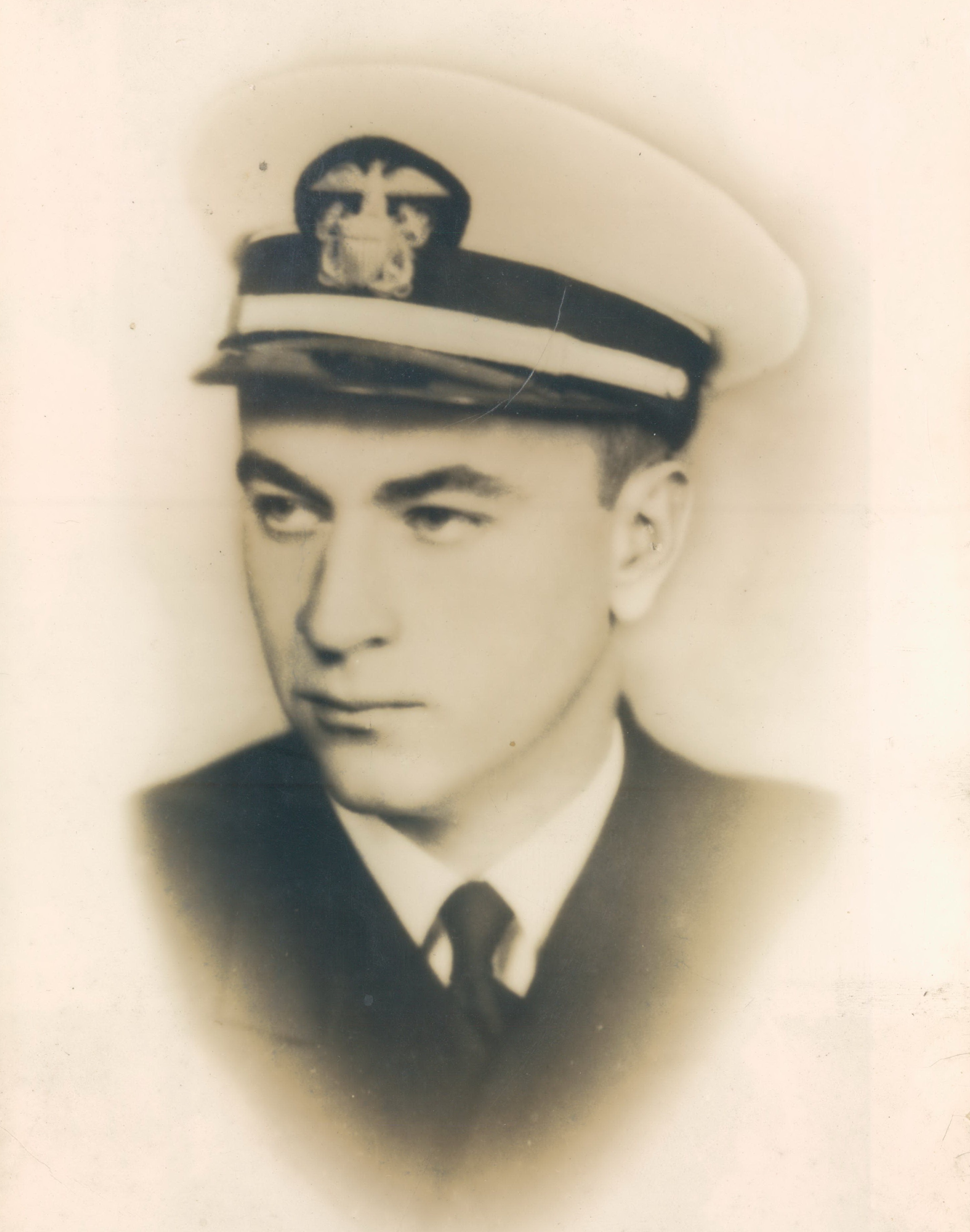 Comments: During the first week Comments: During the first week 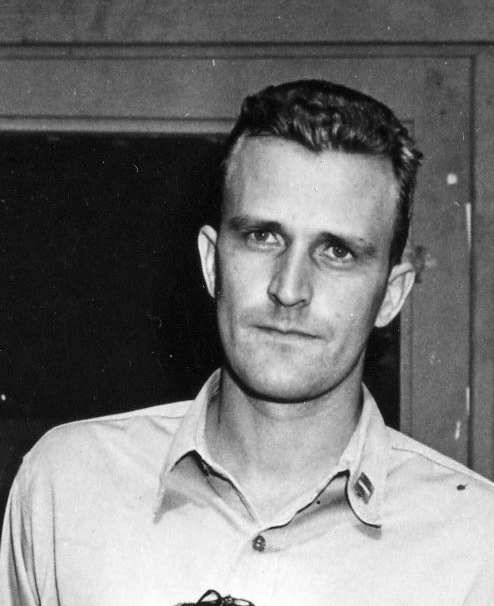 of December, supply-carrying submarines have had more success evading interference than their destroyer bretheren. Derisively called 'Marutsu' ('mole') runs by the indignant submarine skippers, the I-boats had managed to deliver about 20 or more tons of cargo in three nights without major incident by December 8. However, Navy intellegence succeeded in deducing the next scheduled mole run would arrive around midnight on December 9 and passed the information on to the Tulagi mosquito fleet; Lieutenants Searles (left) and Freeland (right) were given the mission to intercept and sink the incoming sub. of December, supply-carrying submarines have had more success evading interference than their destroyer bretheren. Derisively called 'Marutsu' ('mole') runs by the indignant submarine skippers, the I-boats had managed to deliver about 20 or more tons of cargo in three nights without major incident by December 8. However, Navy intellegence succeeded in deducing the next scheduled mole run would arrive around midnight on December 9 and passed the information on to the Tulagi mosquito fleet; Lieutenants Searles (left) and Freeland (right) were given the mission to intercept and sink the incoming sub.
That night, as the two boats waited in the prearranged area, I-3 (sistership I-1 pictured above) rose out of the depths, right on time. Spotting the two PT boats, the submarine crash-dived, leaving her Diahatsu barge floundering in the sea. As Lt. Freeland's 44 strafed the barge, Lt. Searles in PT 59 idled his boat closer to the shore, figuring I-3 would return once things got quiet. Sure enough, as PT 44 lay to while her sailors reloaded their guns, I-3 surfaced again, 400 yards away from PT 59; almost immediately Searles fired two torpedoes, one of which passed under the stern of PT 44; the second struck the submarine and detonated with a large explosion. I-3 sinks with 90 officers and men; an oil slick spreads for an hour and a half. The survivors are the submarine's gunnery officer and three seamen, who were blown overboard by the explosion. These four swim ashore and join the Japanese forces on Guadalcanal and reported the I-3's last moments. The PT crews tried to tow the I-3's bullet-torn barge back to Tulagi, but it sank before they could get back to base. The end result of this disaster was that the Japanese temporarily suspended their submarine supply runs to Guadalcanal.
11/12 December 1942
 Destroyer Resupply Run: Rear Adm. Raizo Tanaka IJN in Teruzuki
Destroyers: Teruzuki, Kawakaze, Suzukaze, Naganami, Arashi, Oyashio, Kuroshio, Kagero, Urakaze, Tamakaze, Ariake
PT Unit: Senior Officer, Lt. John M. Searles USNR in PT 109
Scout Group:
PT 109 (Lt. Searles)
Strike Force:
PT 40 (Lt. Henry S. Taylor USNR)
PT 45 (Lt. Lester H. Gamble USNR)
PT 59 (Ens. Williams E. Kreiner III USNR)
Anti-sub Patrol:
PT 44 (Lt. Frank Freeland USNR)
PT 61 (Lt. Charles E. Tilden USNR)
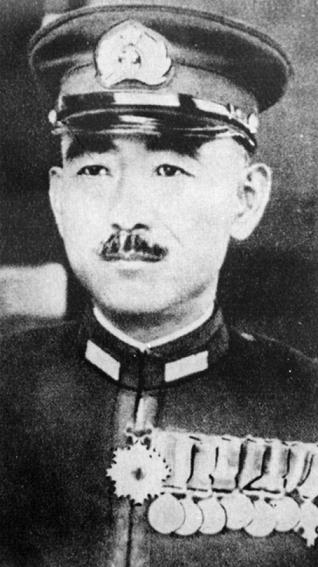
Comments: Radio intelligence issued a warning that detailed the composition, timing, and destination of tonight's Express, along with a possible submarine run off Kamimbo Bay. As Tanaka's Reinforcement Unit completed dropping 1,200 drums of supplies into the sea, PT's 40, 45, and 59 attacked the Japanese ships, with the result that one torpedo from Gamble's PT 45 ripped into flagship Teruzuki (left), killing nine men, crippling the ship, wounding Tanaka (above), and forcing the Japanese to abandon and scuttle the stricken destroyer three hours later. PT's 44 and 109 both attempted torpedo runs on a group of Japanese ships, but shells from Kawakaze and Suzukaze destroyed the 44 boat and forced 109 to run behind a smoke screen. Two officers and seven enlisted men were killed in PT 44's destruction; one officer and one enlisted man survived. Of the 1,200 drums dropped off by Tanaka's ships, only 220 reached Japanese hands; when this fact was reported to Vice Adm. Matome Ugaki, Chief of Staff of the Combined Fleet, the admiral privately questioned wether or not the 17th Army was hoarding supplies. to run behind a smoke screen. Two officers and seven enlisted men were killed in PT 44's destruction; one officer and one enlisted man survived. Of the 1,200 drums dropped off by Tanaka's ships, only 220 reached Japanese hands; when this fact was reported to Vice Adm. Matome Ugaki, Chief of Staff of the Combined Fleet, the admiral privately questioned wether or not the 17th Army was hoarding supplies.
2/3 January 1943
Destroyer Resupply Run: Rear Adm. Tomiji Koyanagi IJN in Naganami
Destroyers:
Escort Section:
Naganami, Kawakaze, Suzukaze, Makinami, Arashio
Transport Section:
Oyashio, Kuroshio, Kagero, Isonami, Ikazuchi
MTB Flotilla One: Senior Officer, Lt. Rollin E. Westholm USN in PT 109
PT 39 (Lt. j/g James B. Greene USNR)
PT 40 (Lt. Allen H. Harris USNR)
PT 45 (Lt. Lester H. Gamble USNR)
PT 46 (Lt. Henry S. Taylor USNR)
PT 48 (Lt. Thomas E. Kendall USNR)
PT 59 (Lt. John M. Searles USNR)
PT 109 (Lt. Westholm)
PT 115 (Ens. George H. Brooks USNR)
PT 123 (Ens. Ralph L. Richards USNR)
Comments: Comdr. Allen P. Calvert arrived on December 15, 1942 to set up Motor Torpedo Boat Flotilla One, with headquarters on Tulagi in an effort to bring all the squadrons under a single command. On New Years Eve 1942, six new PT's joined the mosquito fleet: four boats of MTBRON Six and two more boats of MTBRON Two. On the Japanese side, Rear Admiral Tanaka has been replaced by Rear Admiral Koyanagi as the commander of the Reinforcement Unit, due to injuries Tanaka received when the PT's sank his flagship on 11 December.
The PT's attacked Koyanagi's ships for two hours, firing 18 torpedoes; the boats not only had to deal with the usual destroyer shelling, strafing, and searchlights, but the Japanese also brought in three floatplanes as air cover. The floatplane pilots found the wakes of the PT's easy to spot up to four miles away, even in the darkness because of phosphorescent glow. The boats were repeatedly strafed and bombed by the aircraft as they tried to make torpedo attacks on the Express. Lt. Gamble's PT 45 was the only boat to put in a claim for a hit on a destroyer, but the claim is unconfirmed. The next day the Japanese 17th Army reported they retrieved 540 drums and 250 rubber bags of provisions, about a five-day supply.
10/11 January 1943
Destroyer Resupply Run: Rear Adm. Tomiji Koyanagi IJN in Kuroshio
Destroyers:
Escort Section:
Kawakaze, Kuroshio, Hatsukaze, Tokitsukaze
Transport Section:
Arashi, Arashio, Oshio, Makinami
PT Defensive Patrol:
Senior Officer, Lt. Rollin E. Westholm USN in PT 112 (Commander Task Group 61.2)
Task Unit 61.2.1 (scout group 1)
PT 39 (Lt. j/g Ralph O. Amsden USNR)
PT 45 (Lt. Lester H. Gamble USNR)
Task Unit 61.2.2 (scout group 2)
PT 48 (Lt. Robert L. Searles USNR)
PT 115 (Ens. Bartholomew J. Connolly III USN)
Task Unit 61.2.3 (strike force 1)
PT 40 (Lt. Clark W. Faulkner USNR)
PT 43 (Lt. Charles E. Tilden USNR)
PT 112 (Lt. Westholm)
Task Unit 61.2.4 (strike force 2)
PT 36 (Lt. j/g Marvin G. Pettit USNR)
PT 46 (Lt. Henry S. Taylor USNR)
PT 59 (Lt. John M. Searles USNR)
Comments: The Japanese ships came in under the cover of a rain squall; the two scout groups missed seeing them completely. The first contact was made by Lt. Westholm's strike group 1, spotting three destroyers off the Guadalcanal coast. The three boats attacked the enemy ships but the Japanese sank PT 112 and damaged PT 43 so badly it had to be abandoned. Lt. Faulkner in PT 40 and Lt. Westholm in PT 112 claimed one torpedo hit apiece and one of these two claims represented a certain hit on destroyer Hatasukaze. The torpedo's explosion killed eight sailors and wounded twenty-three others. The damaged destroyer was still able to retire back to Shortland at 16 knots, with three of her sisters as escorts. PT's 39, 45, and 46 all fired torpedoes at enemy ships at long range, but only Taylor's 46 made claims for torpedo hits. PT 43 was later sighted beached on the Japanese-held portion of Guadalcanal, and was destroyed by gunfire from a New Zealand corvette to prevent capture. The 17th Army reported the recovery of 250 drums with thirty tons of food, medicine, and ammunition, but the PT boats shot up and sank another 250 drums with gunfire.
14/15 January 1943
Destroyer Troop/Resupply Run: Rear Adm. Satsuma Kimura IJN commanding
Destroyers: Tanikaze, Arashi, Kuroshio, Tokitsukaze, Maikaze, Isokaze, Urakaze, Hamakaze
PT Defensive Patrol, MTB Flotilla One:
Senior Officer, Lt. Rollin E. Westholm USN in PT 109 (Commander Task Group 61.2)
Task Unit 61.2.4 (scout group 1):
PT 38 (Lt. Robert L. Searles USNR)
PT 59 (Lt. John M. Searles USNR)
Task Unit 61.2.5 (scout group 2)
PT 39 (Lt. Clark W. Faulkner USNR)
PT 115 (Ens. Bartholomew J. Connolly III USN)
Task Unit 61.2.1 (strike group 1)
PT 37 (Lt. John H. Clagett USN)
PT 45 (Lt. Lester H. Gamble USNR)
PT 109 (Lt. Westholm)
Task Unit 61.2.2 (strike group 2)
PT 36 (Lt. j/g Marvin G. Pettit USNR)
PT 40 (Lt. Allen H. Harris USNR)
PT 48 (Ens. John F. Kearney USNR)
Task Unit 61.2.3 (strike group 3)
PT 46 (Lt. Henry S. Taylor USNR)
PT 47 (Lt. Hugh M. Robinson USN)
PT 123 (Ens. Ralph L. Richards USNR)
Comments: The Express loaded passengers as well as supplies for this run. By now, the Japanese have written off Guadalcanal as a lost cause; embarked on the nine destroyers were Major Keiji Yano and his battalion of 850 men. The Yano Battalion would be detailed as the rear guard for the 17th Army during its evacuation of Guadalcanal in February. Bad weather concealed the Reinforcement Unit from American aircraft as it threaded its way down the Slot, and air cover from floatplanes protected the destroyers from PT boat attacks. The PT's fired 17 torpedoes, with unconfirmed claims of hits from PT's 45, 123, and 115. The Japanese ships successfully landed Major Yano and his men on Cape Esperance.
1/2 February 1943
Destroyer Evacuation Run: Rear Adm. Shintaro Hashimoto IJN in Makinami
Cape Esperance Unit:
Screen:
1st Unit: Maikaze, Kawakaze, Suzukaze
2nd Unit: Shirayuki, Fumizuki
Transport Unit:
Desdiv 10: Kazegumo, Makigumo, Yugumo, Akigumo
Desdiv 17: Tanikaze, Urakaze, Hamakaze, Isokaze

Kamimbo Unit:
Screen:
Satsuki, Nagatsuki
Transport Unit:
Desdiv 16: Tokitsukaze, Yukikaze
Desdiv 8: Oshio, Arashio
MTB Flotilla One: Task Group 61.2, Senior Officer,
Lt. Rollin E. Westholm USN in PT 109
Task Unit 61.2.1:
PT 39 (Lt. Henry S. Taylor USNR)
PT 47 (Lt. Robert L. Searles USNR)
Task Unit 61.2.2:
PT 48 (Lt. Lester H. Gamble USNR)
PT 111 (Lt. John H. Claggett USN)
Task Unit 61.2.3:
PT 37 (Ens. James J. Kelly USNR)
PT 59 (Lt. John M. Searles USNR)
PT 115 (Ens. Bartholomew J. Connolly III USN)
Task Unit 61.2.4:
PT 123 (Ens. Ralph L. Richards USNR)
PT 124 (Lt. Clark W. Faulkner USNR)
Task Unit 61.2.5:
PT 36 (Lt. Charles E. Tilden USNR)
PT 109 (Lt. Westholm)
Comments: This was the last fight between the Tokyo Express and the PT's at Guadalcanal and was the most violent. Three boats--the 37, 111, and 123 were sunk, with a total of six enlisted men killed, three officers and six enlisted men missing, and one officer and five enlisted men seriously wounded. PT's 37 and 111 were sunk by destroyer gunfire, while the 123 was destroyed by a bomb from a Japanese floatplane. Five PT's fired 19 torpedoes, claiming 2 destroyers sunk and two damaged. The only Japanese ship sunk was Makigumo; there is still some dispute over whether she was damaged by an American mine (300 were laid in the area by US Navy minelayers earlier in the day) or from torpedoes from Lt. Faulkner's PT 124. The crew abandoned ship, and it was scuttled by torpedoes from Yugumo. The Japanese evacuated 4,935 men in this first run; two more evacuation trips were made on the nights of 4/5 and 7/8 February 1943, but the PT's did not attempt to intercept these runs.
|
|
|
|
|
Copyright © 2002-2022 by Gene Kirkland
|